
"dead bean roast"
300 article(s) found
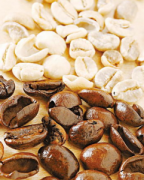
Coffee beans common sense coffee roasting defective beans introduction
Mildewed beans: because the drying is not complete, or in the transportation, storage process damp, and grow cyan, white mold, sometimes make beans stick together, if not remove these moldy beans, will produce mildew smell. Dead beans: beans that bear abnormal fruit. The color is not easily changed by baking, so it is easy to distinguish. The flavor is thin and harmful as silver skin, which will become peculiar smell.

Selection of coffee beans introduction to defective beans in coffee roasting
Moldy beans: because of incomplete drying, or damp in the process of transportation and storage, cyan and white molds grow, which sometimes make the beans stick together. If these moldy beans are not removed, they will produce moldy smell. Dead beans: beans with abnormal results. The color is not easy to change because of baking, so it is easy to distinguish. The flavor is thin, as harmful as silver skin, and will become a peculiar smell.

How about Bali Lamb Gold Coffee? is Bali male Bean Coffee expensive
Professional coffee knowledge exchange more coffee bean information please follow the coffee workshop (Wechat official account cafe_style) Indonesia is rich in coffee, especially Balinese coffee, world-famous. The three major coffee factories in Bali are all run by Chinese, mainly divided into: Golden Coffee, Golden Rabbit Coffee and Little Sheep Coffee. When my aunt went to Bali for a wedding not long ago, she was pushed by her local friends.

The degree of coffee extraction how to extract coffee
Brewing coffee water temperature should be inversely proportional to roasting degree extraction water temperature is not consistent, American electric drip rate kettle due to different brands, mostly controlled in 92 ℃ 96 ℃ constant temperature extraction range, espresso machine according to the baking degree used by each store, the water temperature is set in 88 ℃ 93 ℃ range, basically, the deeper the extraction water temperature is lower, about 88 ℃, the more shallow roasting, the higher the water temperature

Coffee and its products-terminology
The national standard of the people's Republic of China Coffee and its products Vocabulary GB/T 18007 1999 terms for coffee and its products this standard specifies the most commonly used terms for coffee and its products. This standard is applicable to the formulation and revision of relevant standards and documents, as well as the preparation and translation of professional manuals, teaching materials, books and periodicals. 2 Coffee nouns and definitions 2.1 General techniques

The water temperature of brewing coffee should be inversely proportional to the roasting degree, coffee extraction and roasting coffee beans, black coffee.
Brewing coffee water temperature should be inversely proportional to roasting degree extraction water temperature is not consistent, American electric drip rate kettle due to different brands, mostly controlled in 92 ℃ 96 ℃ constant temperature extraction range, espresso machine according to the baking degree used by each store, the water temperature is set in 88 ℃ 93 ℃ range, basically, the deeper the extraction water temperature is lower, about 88 ℃, the more shallow roasting, the higher the water temperature

The temperature of brewing coffee should be inversely proportional to the roasting degree. Hand flush, siphon, filter pot and smart filter cup
Brewing coffee water temperature should be inversely proportional to the roasting degree of various brewing methods extraction water temperature is not consistent, American electric titration pot due to different brands, mostly controlled at 92℃96℃ constant temperature extraction range, espresso machine can be used according to the store roasting degree, water temperature is set at 88℃93℃ range, basically, the deeper the roasting extraction water temperature is lower, about 88℃, the shallower the roasting water temperature is higher, probably

Domineering side leak! -Death Wish Coffee
Frankly speaking, the first sight of the packaging and name of this coffee is like meeting an apple that poisoned Snow White. If you want to die, please have the courage to try!

Boutique Coffee Coffee Tasting Terms
Acidity acidity is a typical and anticipated part of coffee cuisine. It is a direct taste under and above your tongue, and its role is different from that of taste to wine. Acidity provides strong, clear and lively sensory properties, without the appearance of acidity, coffee coffee tends to be insipid. Pay attention to this acidity indicator, thousands of

High-quality coffee beans defective beans in coffee baking
Moldy beans: because of incomplete drying, or damp in the process of transportation and storage, cyan and white molds grow, which sometimes make the beans stick together. If these moldy beans are not removed, they will produce moldy smell. Dead beans: beans with abnormal results. The color is not easy to change because of baking, so it is easy to distinguish. The flavor is thin, as harmful as silver skin, and will become a peculiar smell.

General knowledge of Coffee Tasting Terms boutique coffee culture
Acidity acidity is a typical and anticipated part of coffee cuisine. It is a direct taste under and above your tongue, and its role is different from that of taste to wine. Acidity provides strong, clear and lively sensory properties, without the appearance of acidity, coffee coffee tends to be insipid. Pay attention to this acidity indicator, thousands of

Coffee brewing golden cup standard coffee how to brew coffee the golden proportion of coffee brewing
According to the research of Dr. Lockhart and Ringo, a senior consultant of SCAA (American Fine Coffee Association), as far as coffee extraction is concerned, the dissolution rates of flavor molecules and hot water often vary according to molecular weight and polarity. Coincidentally, the low molecular weight sour aroma of flowers and fruits, as well as the taste of nuts and toast, as well as the cereal and rice and wheat flavors produced in the early stage of the Mena reaction will be excellent.
Introduction of several kinds of defective beans
Moldy beans: because of incomplete drying, or damp in the process of transportation and storage, cyan and white molds grow, which sometimes make the beans stick together. If these moldy beans are not removed, they will produce moldy smell. Dead beans: beans with abnormal results. The color is not easy to change because of baking, so it is easy to distinguish. The flavor is thin, as harmful as silver skin, and will become different.
Introduction of several defective beans of Coffee beans
Moldy beans: because of incomplete drying, or damp in the process of transportation and storage, cyan and white molds grow, which sometimes make the beans stick together. If these moldy beans are not removed, they will produce moldy smell. Dead beans: beans with abnormal results. The color is not easy to change because of baking, so it is easy to distinguish. The flavor is thin, as harmful as silver skin, and will become a peculiar smell.
Distinguish coffee defective beans
Moldy beans: because of incomplete drying, or damp in the process of transportation and storage, cyan and white molds grow, which sometimes make the beans stick together. If these moldy beans are not removed, they will produce moldy smell. Dead beans: beans with abnormal results. The color is not easy to change because of baking, so it is easy to distinguish. The flavor is thin, as harmful as silver skin, and will become a peculiar smell.
The key to high-quality coffee beans and delicious coffee
High-quality coffee beans are the source of sweet coffee. A good coffee bean smells sweet and mellow, looks like plump and average particles, complete in shape, shiny and shiny, and is fragile by hand pressure (unbreakable hands are called dead beans). Coffee trees are evergreen tropical shrubs. Coffee is dark green at birth, goes through yellow and red, and finally becomes crimson.
The secret of brown fragrance
High-quality coffee beans are the source of delicious coffee. A good coffee bean smells delicious and mellow, looks like full and uniform particles, complete shape and bright color, and is brittle by hand pressure (unbreakable hand pressure is called "dead bean").
Coffee basic knowledge boutique coffee beans several kinds of defective beans introduction
Moldy beans: because the drying is not complete, or in the transportation, storage process damp, and grow cyan, white mold, sometimes make beans stick together, if not remove these moldy beans, will produce mold odor. Dead beans: beans that bear abnormal fruit. The color is not easily changed by baking, so it is easy to distinguish. Flavor thin, with silver skin

Introduce several kinds of coffee defective beans
Moldy beans: because of incomplete drying, or damp in the process of transportation and storage, cyan and white molds grow, which sometimes make the beans stick together. If these moldy beans are not removed, they will produce moldy smell. Dead beans: beans with abnormal results. The color is not easy to change because of baking, so it is easy to distinguish. The flavor is thin, as harmful as silver skin, and will become different.
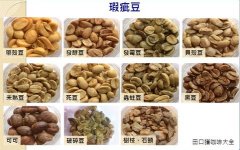
Introduction to Coffee basic knowledge, Fine Coffee and defective beans
Moldy beans: because of incomplete drying, or damp in the process of transportation and storage, cyan and white molds grow, which sometimes make the beans stick together. If these moldy beans are not removed, they will produce moldy smell. Dead beans: beans with abnormal results. The color is not easy to change because of baking, so it is easy to distinguish. The flavor is thin, as harmful as silver skin, and will become a peculiar smell.